
Reclaiming Ourselves
How Supremacy Uses Sexual Conformity as a Means of Control


**Below is a blog form one of the points for the talk I will be giving at Take Root Conference on October 17-19**
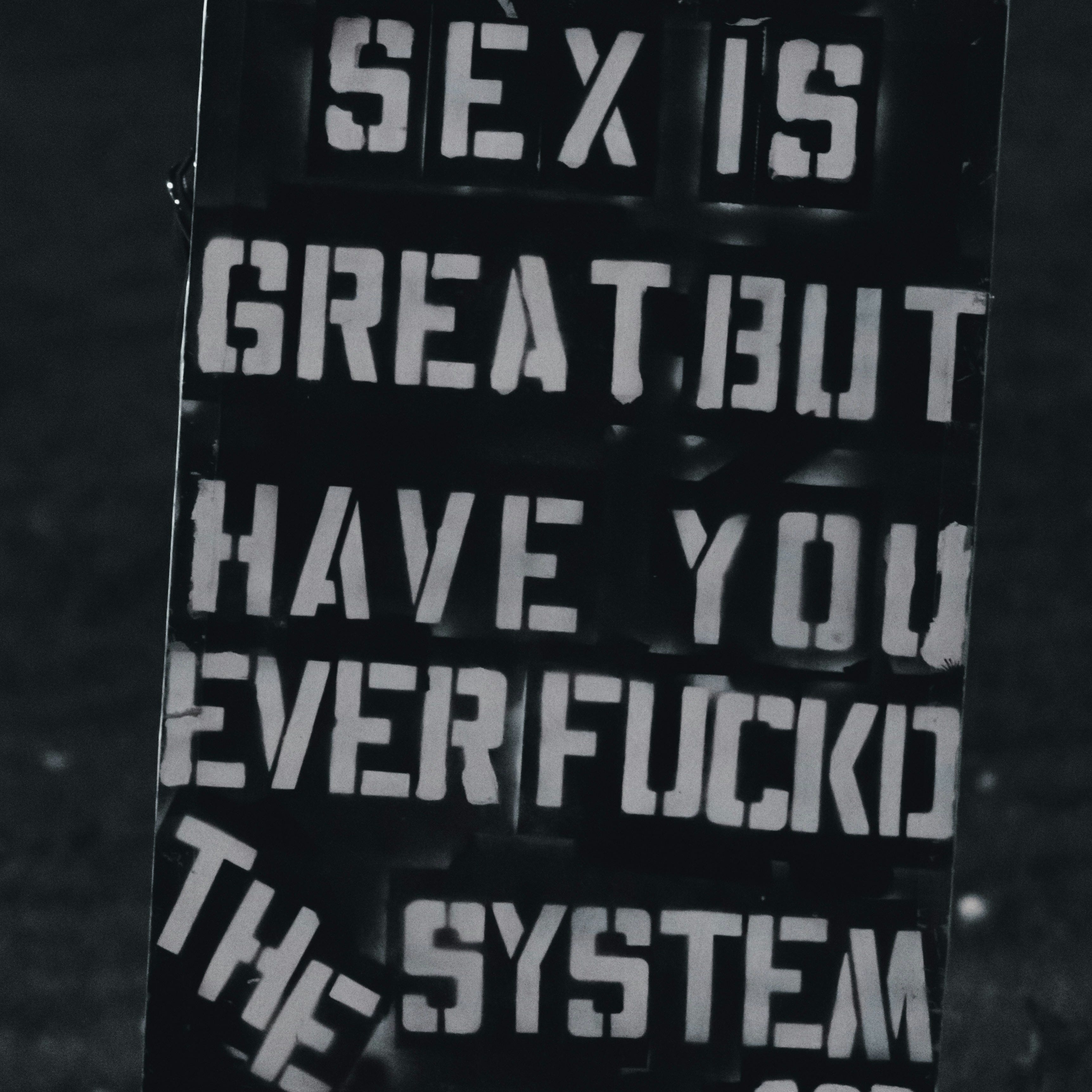
One thing that is often taught in evangelicalism (and I think probably elsewhere) is the idea that there were ancient cultures that used ritualistic prostitution in their cultic worship and we are supposed to condemn that as “barbaric” or “sexually deviant.” Most of this comes from Christian traditions and framing that have historically pointed to ritualistic sexual practices, along with the notion of child sacrifice, to justify biblical genocide (like my Bible college’s Intro to Theology professor said, “God had to have the Canaanites destroyed because they were too immoral to keep around. God didn’t want them to influence the Israelites.”). However, this narrative and framing has also been used (either intentionally or unintentionally) to create a religious and cultural justification to force us to divorce our bodies from our sense of self through our sexuality for the means of controlling us.
For instance, the story of Sodom and Gomorrah have very little to do with sexual ethics when you look at it. Narrative-wise, the cities were condemned to be destroyed even before the visitors went to Lot’s house. However, the current narrative used among the majority of Christianity is that they were condemned for “sodomy,” because they practiced homosexuality (which ignores the fact that rape is always wrong and interpretations of this story highlights the cultural trend of Christians beig much faster to condemn homosexuality than rape), but the cities were already going to be destroyed before those events took place and it is improper to interpret the events as being the cause for the judgement. It would be more accurate to say the attempted rape illustrated their evil, but was not the final factor of the their condemnation.
I bring this up because it seems that this is a rather common trend in the Christian use of sexuality and the condemnation of anyone who does not follow their view of sexual ethics. This is taken further in the way that Christians will talk about the ancient nation of Israel. Often, the genocide of the Canaanites is justified because their sexual religious practices, which are understood by Christians as immoral. This in itself is likely a false narrative as we simply do not have enough information on ancient Canaanite rituals to fully understand their use of sex in religious practices and most of our understandings come from ancient historians that were known to write historical propaganda against other groups to make their own group look better.
So, the truth is, we simply cannot know what importance sexuality played in ancient religious practices. We do not know what level of consent was at play or the sexual ethics that might have driven their practices (if they even did practice them). We have been groomed to believe that they were wrong, evil, and demonic based on our given belief that they must have been sexually deviant to include sexual practices in worship. This level of misunderstanding is somewhat the point; unrealistically simplistic cultural understandings can be a tool of manipulation.
The thing is, sexuality is more than just who we are attracted to or how we want to have sex. It is a fundamental part of who we are and how we understand ourselves. The reason that there have been religious sexual practices throughout cultures and history is because sex, when done correctly, can connect us to a greater sense of ourselves, who we are, and our existence in the world. Some may call this a connection to the divine and some may call it something else. But one thing is true, sex and sexuality have the potential to be more than just an action, it can be a revealing of something more.
(An aside: asexual people do not miss out on this sense of self. They are able to know who they are and their place in the universe without sexuality and that is subversive in itself.)
However, if sex can be revealing and connecting you to something more, then it is something that threatens hierarchies that rely on those at the top telling those at the bottom who they must be. In many forms of modern Christianity, the self, or flesh, is evil and sinful. The notion of “be like Christ” isn’t about recognizing the way Jesus loved humanity and worked for its betterment, it is about conforming one’s own expression of oneself to the ideological “christ” they have enthroned in their theology. In simple terms, if you do not act in accordance with their theological concepts, you are not being “Christ-like.” This is greatly applied to sexual expression since much of Christianity has aligned itself with cis-heteronormativity in its sexual-theological structures. To act outside of cis-heteronormativity is to actively rebel against the god they worship and understand through their theological ideologies, which comes with the added threat of hell and damnation. However, if you are able to have a sexual practice that is outside of the confines of their theology, then you are challenging the supremacy of that theology.
If cis-heteronormative sexual theology can be questioned, what other theology can be questioned? Can we question inerrancy? Can the pastor’s theology be questioned? Can we view Church history with a lens of scrutiny that might reveal its abuse of power over people? Can people still be “Christ-like” while practicing a sexuality that Jesus didn’t practice? By questioning one foundational ideology, the rest is thrown into question. So, maintaining “Christian sexual ethics” becomes a necessity of maintaining supremacy in the church setting.
However, it is not just religion that utilizes sexual normativity to enforce hierarchy and maintain the status quo. Under white supremacist capitalism, the individual is only as valuable as they are able to produce profit and capital either for themselves or, more often than not, for stakeholders. A person’s sense of self needs to be tied to their means of production, not to who they are as a human. The ability to say “I am more than what I produce” and act on that belief is a threat to the control of people’s understanding of self required to maintain our current state of capitalism.

We saw this come to a head during the 2020 pandemic lockdowns when the largest number of people were either not working or working from home. This extra time to ourselves led a large number of people to examine their sexual orientation and gender identity since they did not have to be a gear in capitalism all the time. The separation from the capitalistic space provided room for people to understand themselves beyond their ability to produce.
This is, in my opinion, why we have seen more corporations move away from Pride and DEI and bow to the “anti-woke” political rhetoric. If sexual expression, especially that through queerness, helps us to understand ourselves on a deeper level, then it can lead us to see ourselves as more than what white supremacy capitalism tells us we need to be: a means of production.
Often, the Christian conformity and the capitalistic conformity are hand-in-hand. To adhere to christ-like behavior is to follow the subservience of our capitalistic system that dehumanizes us to the point of being nothing more than a tool to maintain the status quo. Many forms of Christianity view capitalism as the only theologically acceptable socio-economic structure and a challenge to one is a challenge to the supremacy of the other.
Ultimately, sexuality is regulated in our culture, not through actual ethics of consent and respect, but through the need to be able to control people’s sense of self. White supremacy has a long history of using “sexual deviance” (basically any culture’s view of sexuality and gender that does not conform to white, cis-heteronormativity) as a justification for both physical and cultural genocide. In the history of the US, we used residential schools for indigenous people to force their cultural views of sexuality out of them through the abuse of their children. We “disciplined” Black slaves who did not fit the white framework. And we now call trans people “groomers” and “pedophiles” even though they statistically commit sexual crimes at a far lower rate than the cis population. White supremacy and many forms of Christianity need to demonize the sexual “other” so there is no challenge to the supremacist hierarchy.
Because of this, it is important for us to recognize that there will never be full liberation without sexual liberation. Every body is different and every person has a different sexual expression of who they are. Things like queerness and kinks are only taboo in a culture that needs people to be disconnected from their own bodies to ensure control over people. Breaking free of forced sexual conformity is imperative to challenging hierarchies and ideologies enshrined in our supremacist social structures.
We are all more than cogs in the capitalist machine or the ideological christ-like clone that our culture has tried to force us into. When our sense of self and expressions of ourselves move outside the confines of systemic control, we become a threat to the institutions that utilize hierarchies to maintain oppression in our world. Queerness, gender nonconformity, kink, and so much more are a reminder that we are complex humans with unique expressions of self and our existence challenges supremacy in all its forms.
 | A guest post by
|